
Explainable per case
Every case carries its full reasoning chain and source citations. What the agent did, what a person changed, and who approved it — recorded in sequence and reconstructable on demand.
The platform
RiskPulse is a financial crime investigation platform that plans the file, gathers and validates the evidence, runs the client interaction, and delivers a result an examiner can read. It works with your existing monitoring, screening and case-management systems — every step configured by your policy and adjudicated by your people.
The compliance program
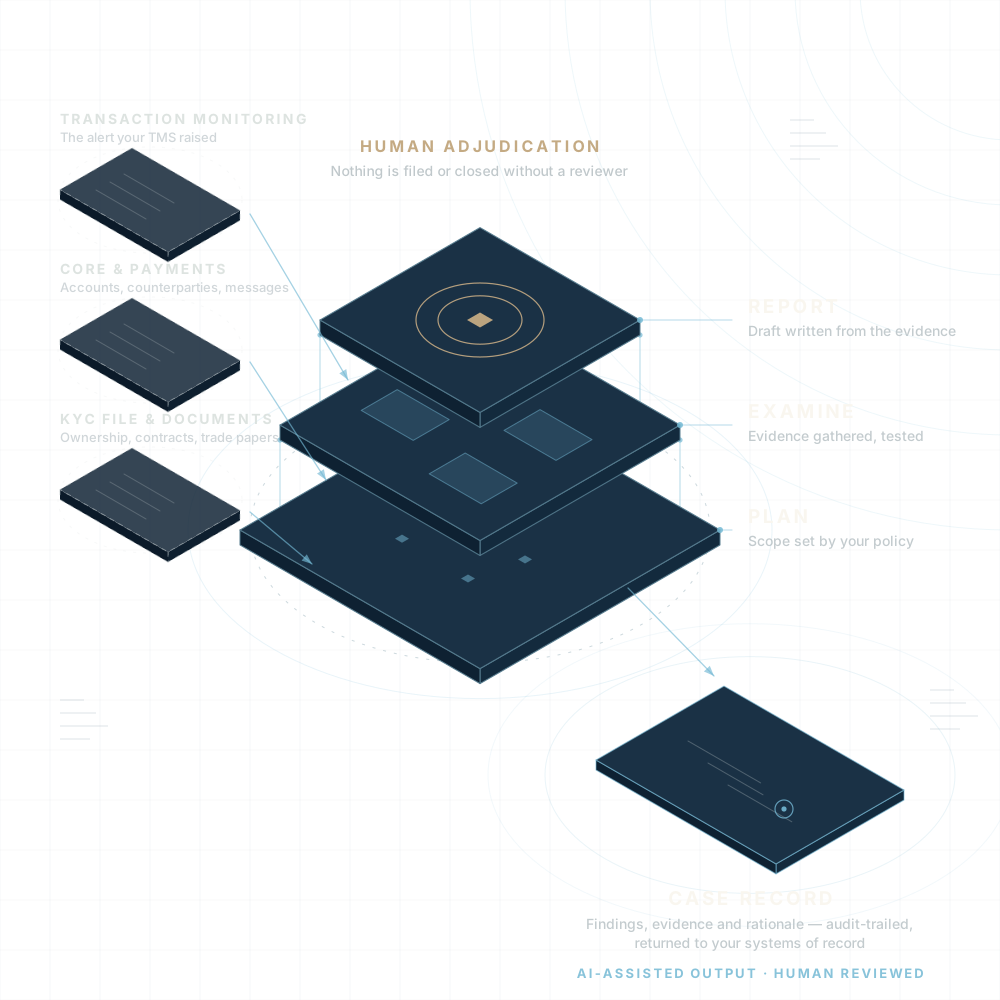
Onboarding sits at the revenue end, while investigation sits at the cost end, of the financial crime compliance value chain — between them is the monitoring system you have already spent years and budget tuning. We leave that alone, accelerate one end, and compress the other.

Input
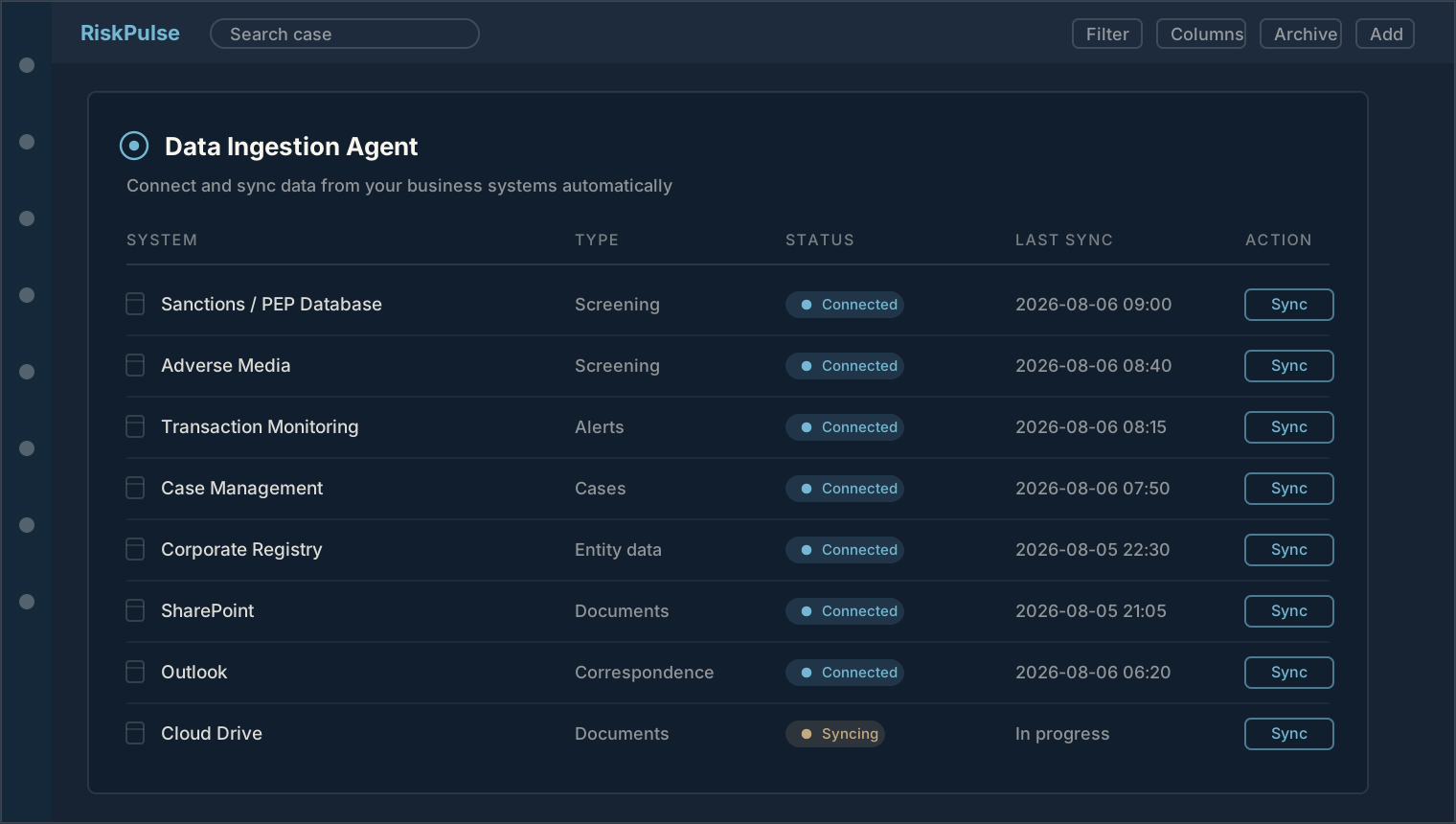
Most institutions have spent years tuning a transaction monitoring system. RiskPulse is deliberately agnostic to it — the agents take the alert it raises and investigate from there, returning the dispositioned case to the system your team already works in.
How it runs
Three coordinated agents, and each answers for its own work. A reviewer can interrogate the plan, the evidence, and the conclusion independently — accept, amend, or reject each without disturbing the rest.

Configuration
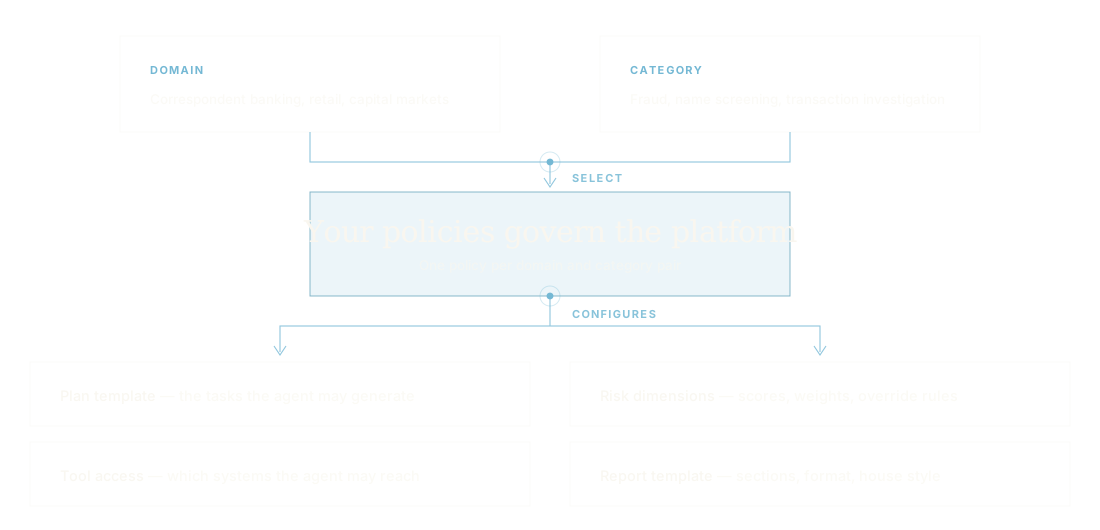
Every case carries a domain and a category. Together they select a policy — and that policy configures what the agents do, what they may touch, how the risk is scored, and what the finished report looks like. Nothing runs on a generic definition of good practice.
The same engine, different policy
This is why a single platform can run a name screening disposition and an institutional onboarding file. The scoring structure never changes — weighted dimensions, a composite band, override rules. What changes is which dimensions are being scored, and that is yours to define.
Output
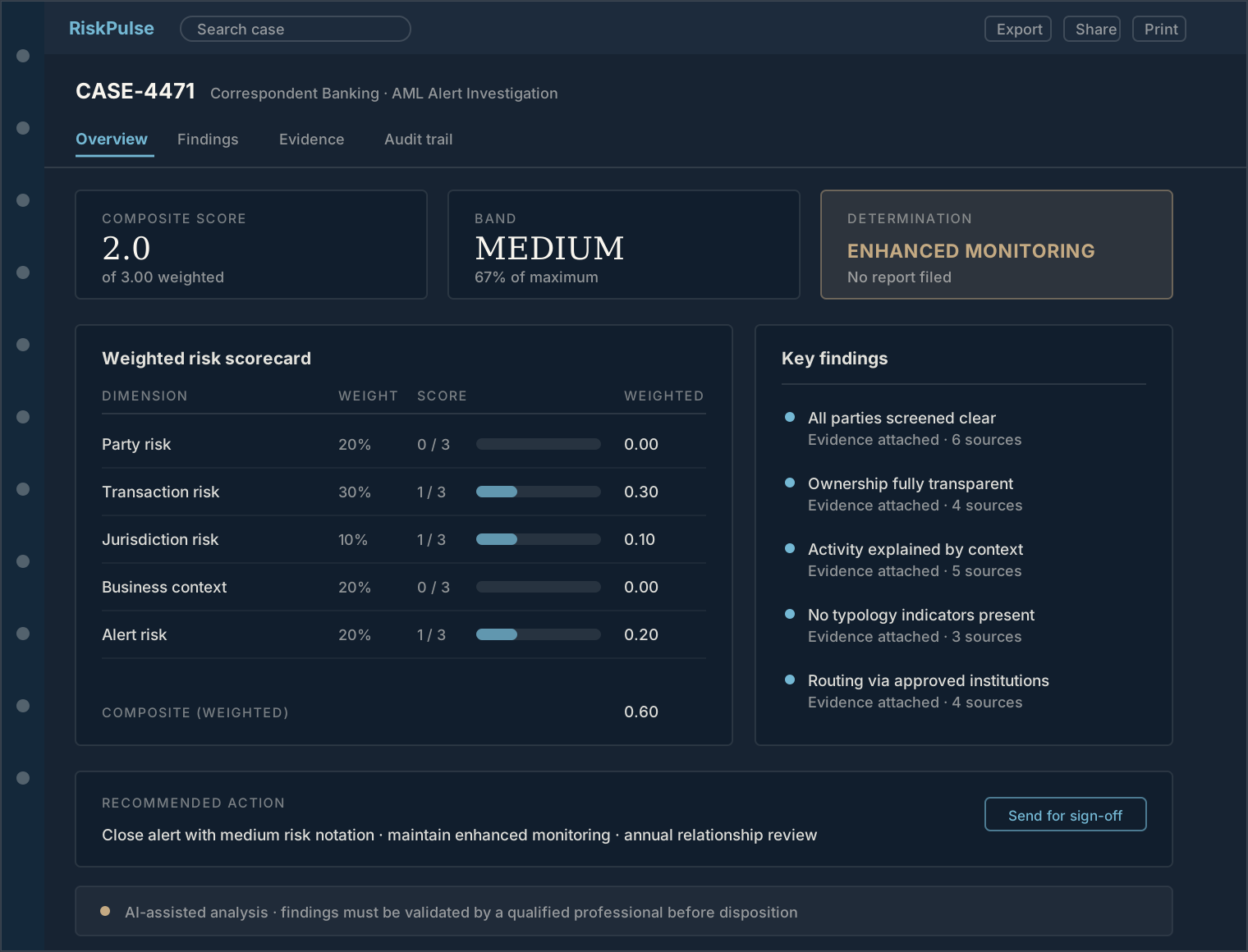
Findings, actions and outputs are assembled into a complete case record. Every conclusion carries its reasoning chain and a citation to the source document, so the file can be re-read, questioned, and defended long after the analyst who closed it has moved on.
Governance and quality
Two separate controls sit around the work: governance, which makes each case explainable after the fact, and quality assurance, which ensures that the final result is of the highest quality.
Every case carries its full reasoning chain and source citations. What the agent did, what a person changed, and who approved it — recorded in sequence and reconstructable on demand.
A sampling methodology is built into every case type, so your quality team can draw and assess a representative sample rather than reviewing at random or reviewing everything.
A separate set of agents assesses case quality end to end against your methodology — a second opinion on the work, not a second run of it.
Technology and architecture
RiskPulse is a containerized, cloud-native platform that deploys into an isolated tenancy. It is designed to comply with your security standards.
What is RiskPulse platform
Each is the same engine under a different policy. Our platform is capable of addressing financial crime compliance and corporate fraud use cases.
Dispositions sanctions, PEP, and adverse media alerts with a reasoned rationale for each — semantic matching rather than fuzzy-string guesswork.
Explore Name Screening & SanctionsHandles the fund, SMA, LP, and SPV structures behind a single mandate — each entity, domicile, and product scope treated as its own file.
Explore Capital Markets OnboardingVerifies documents, maps ownership to the ultimate beneficial owner, scores risk against your policy, and runs the enhanced due diligence depth your CDD model requires.
Explore Commercial Banking OnboardingSanctions, PEP, and adverse media hits tested semantically against the alert — entity type, jurisdiction, and identifying detail — with a written rationale for each disposition.
Explore Payment ScreeningReviews respondent relationships, nested activity, and payment flows. Builds the periodic review file and evidences the risk position.
Explore Correspondent BankingReads trade documents, tests pricing against benchmarks, checks vessel and route consistency, and screens every counterparty in the chain.
Explore Trade-Based Money LaunderingMerchant, chargeback, and account-level fraud patterns assessed against control, collusion, and documentation indicators — investigated on the same engine under its own policy.
Explore Merchant FraudInvoice manipulation, shell vendors, and payment diversion schemes scoped from the allegation — ownership traced, transactions reconstructed, and the finding written against your policy.
Explore Vendor FraudCollects transactional and behavioral data, traces the flow of funds across accounts, and produces an investigator-ready case file with the narrative drafted.
Explore Corporate FraudSee it on your own file
Pick a real file or a closed case and see how RiskPulse plans it, evidences it, and writes it up under your policy.
Request Demo